Launch offer — valid today only

📄 Digital book in PDF · read it on your phone or print it

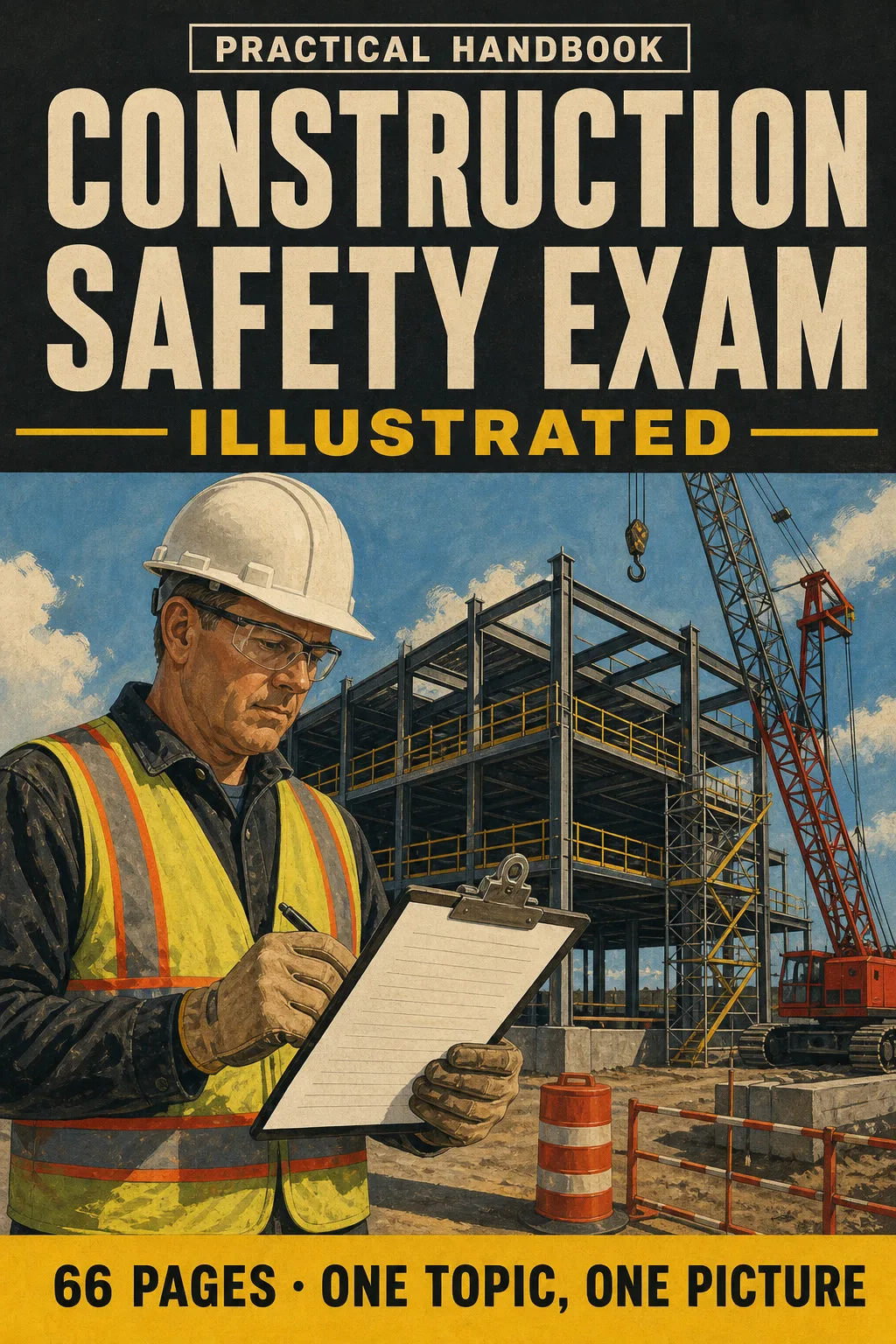
Construction Safety Exam Illustrated: Every Key Number in Drawings, the Same 4 Steps on Every Page One Jobsite Hazard per Page

Fall protection, trenches, ladders and scaffolds, power lines, cranes, silica, noise, heat and the incidence rate math. Every topic gets its own page: the drawing first, then the numbers. Based on OSHA 29 CFR 1926 and the August 2024 exam blueprint. 66 illustrated pages.

START STUDYING THIS WAY

🔒 Secure checkout · PDF by email · 30-day guarantee

Every topic, its own pageEach hazard drawn, with the explanation right beside it
66 illustrated pages9 parts, from how the exam works to exam day
Up-to-date sourcesOSHA 29 CFR 1926, 29 CFR 1904 and the 2024 exam blueprint
PDF by emailFormat

Look Inside the Book

Every page has one big drawing and a box with the numbers you need to know:

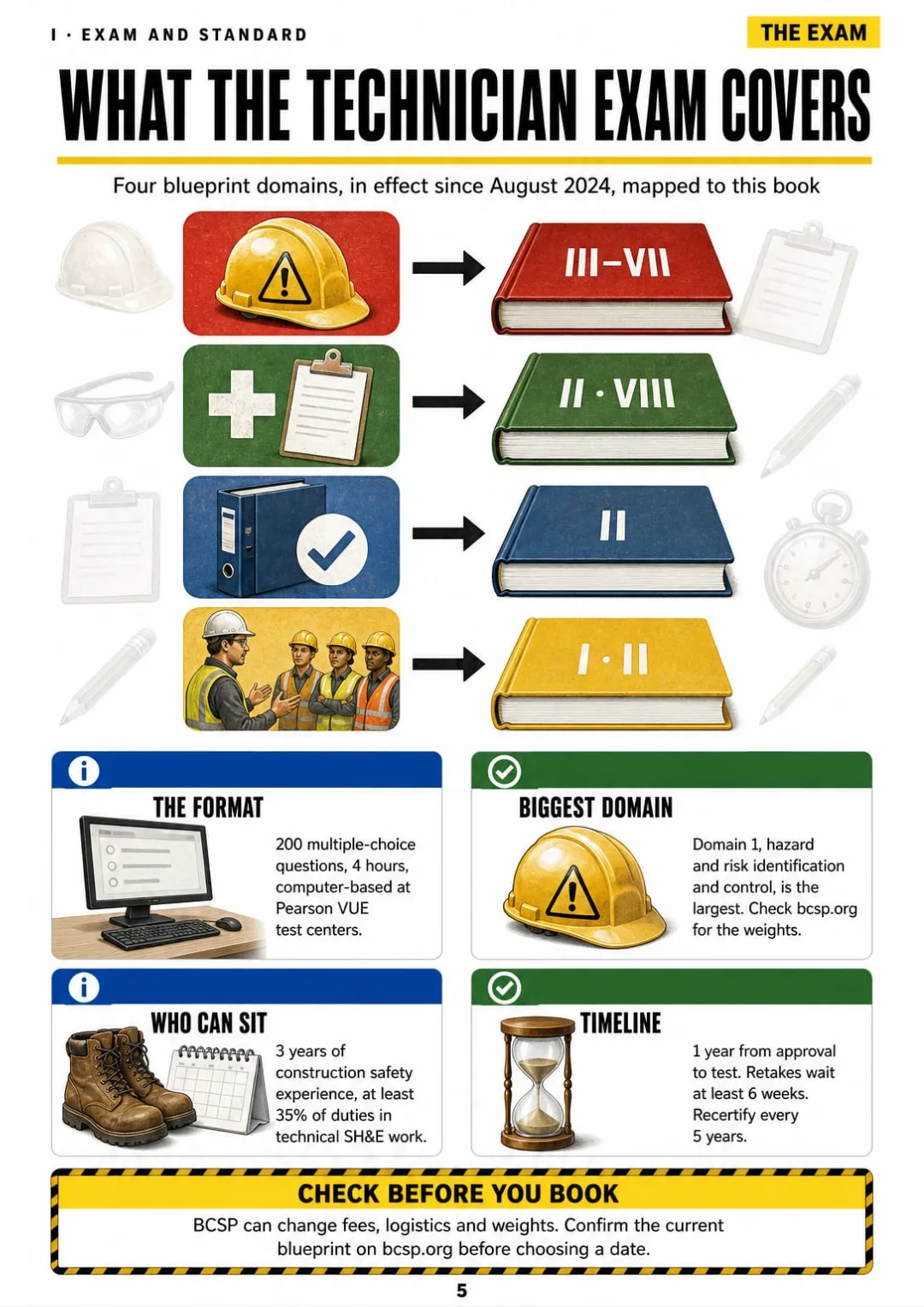
CHST exam: 200 questions, 4 hours, 4 domains mapped to the book's parts
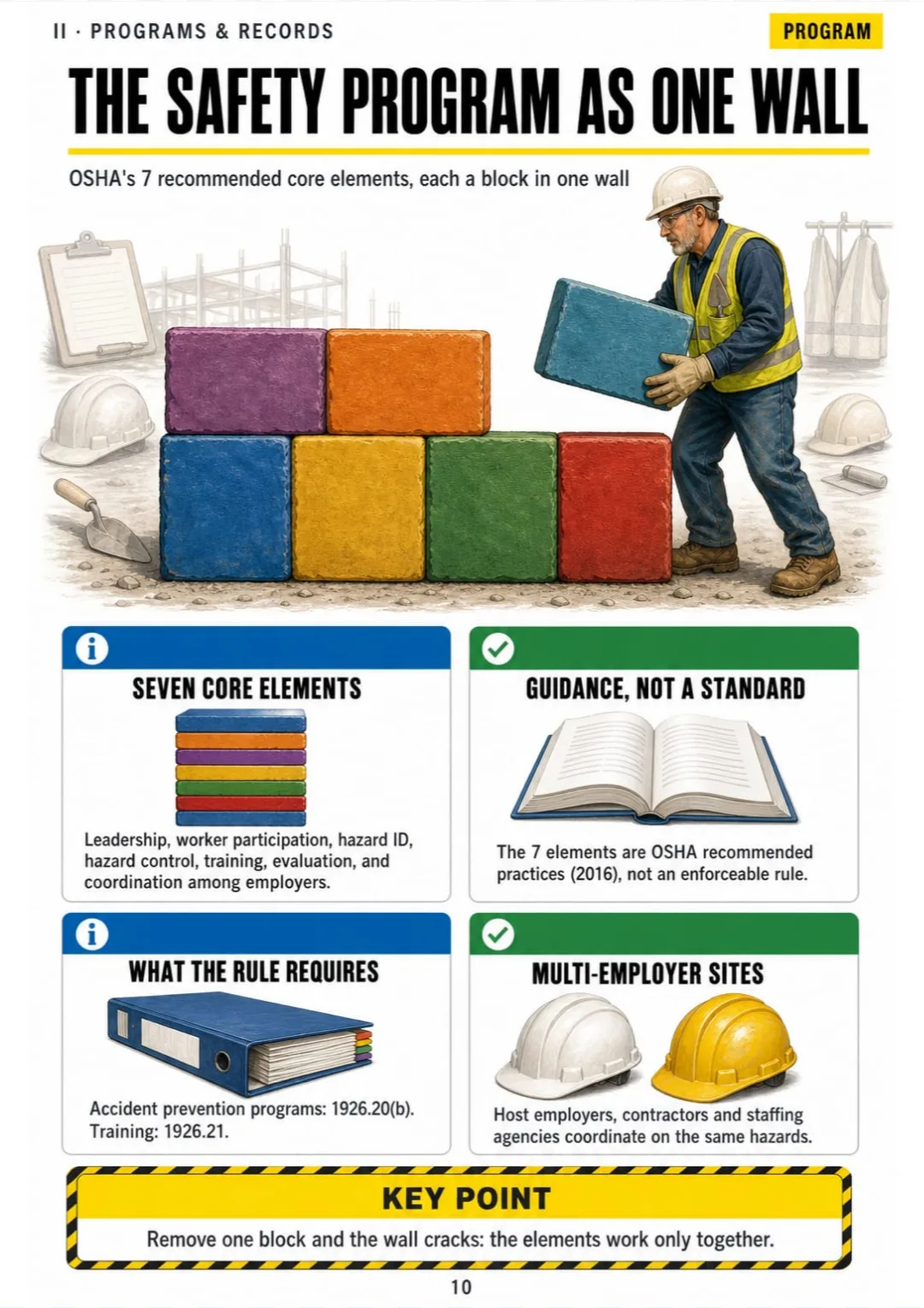
OSHA's 7 recommended program elements, drawn as one wall
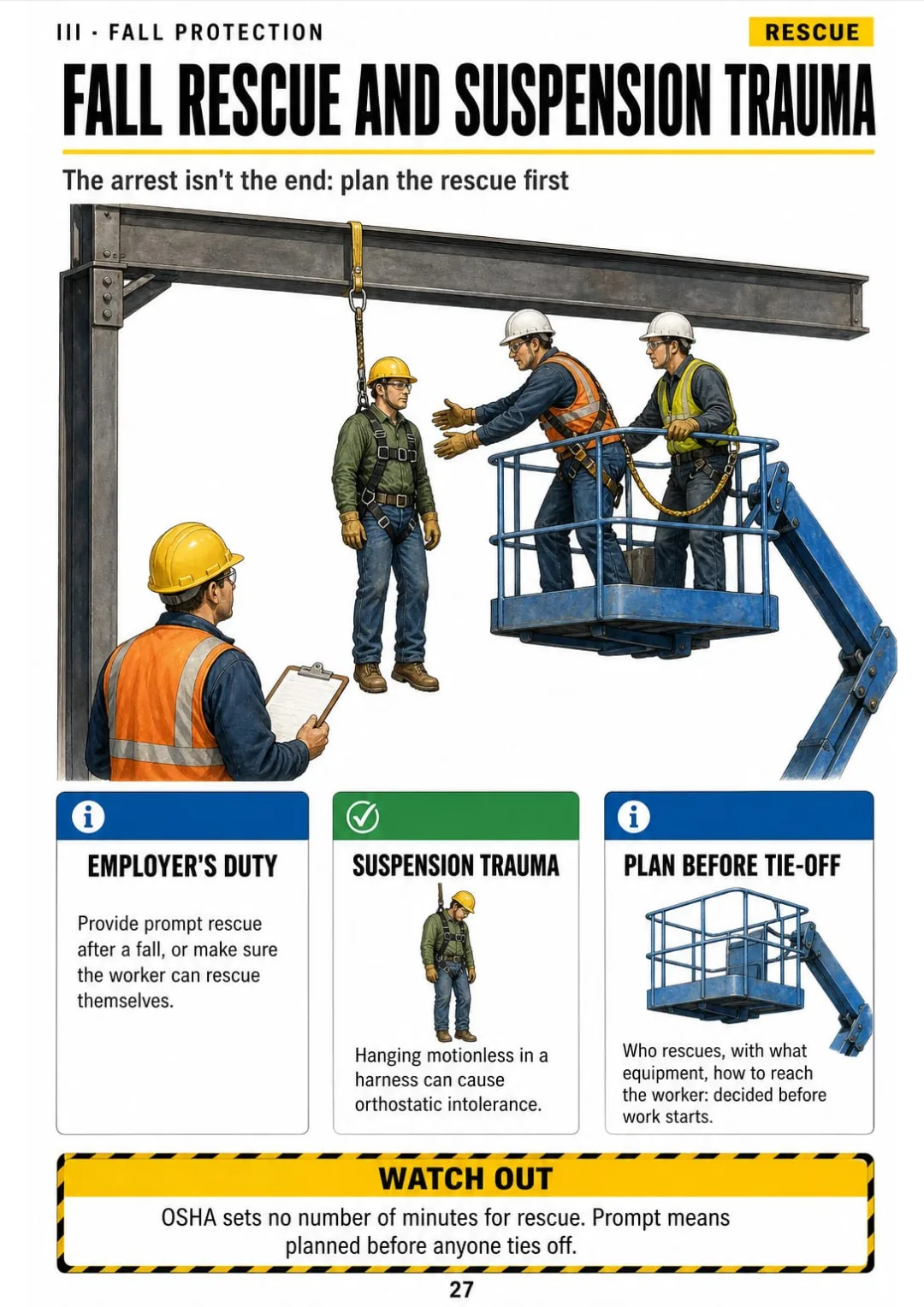
Prompt rescue or self-rescue required · hanging still can cause suspension trauma
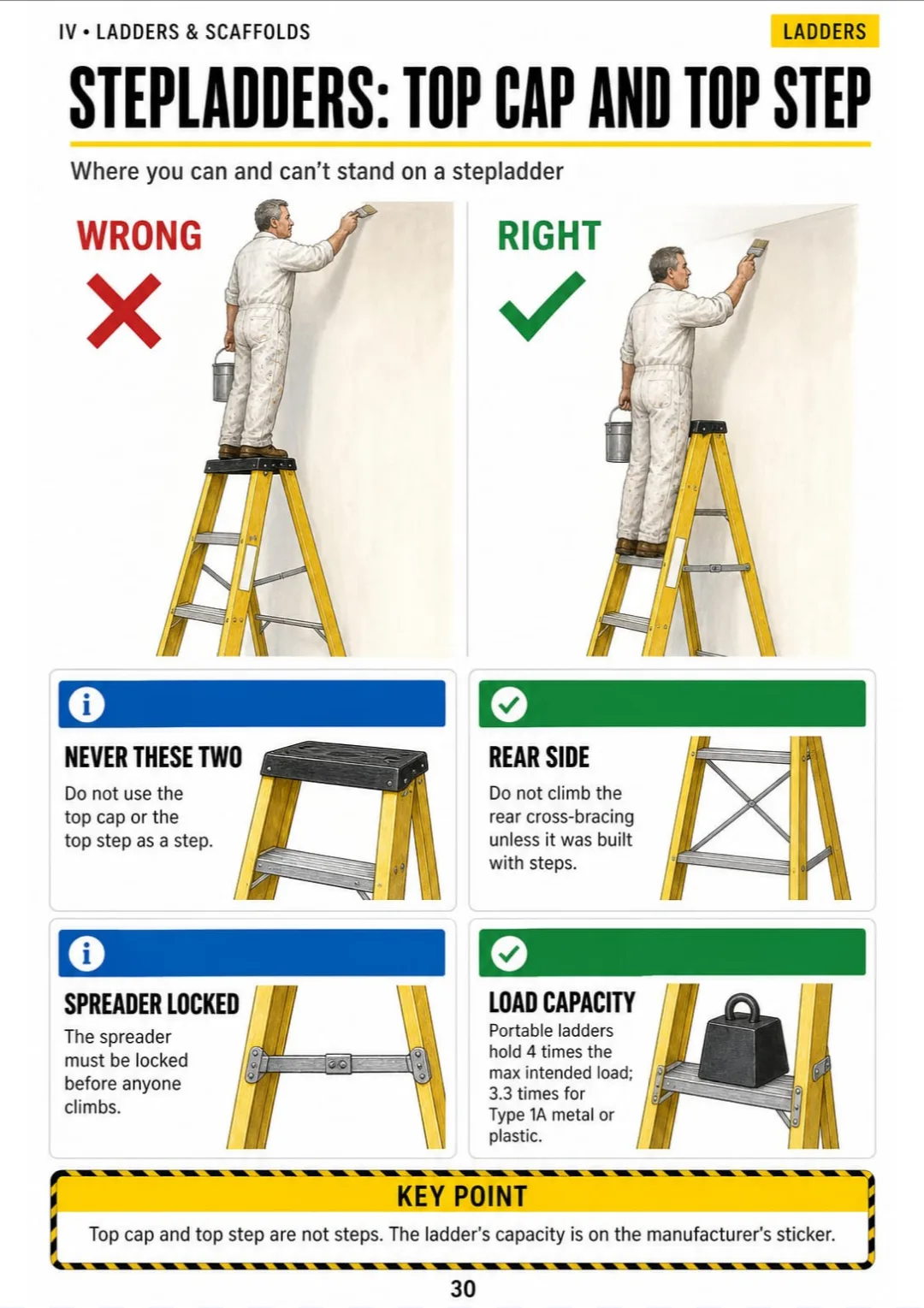
Stepladder: no top cap, no top step, spreader locked, 4× intended load.
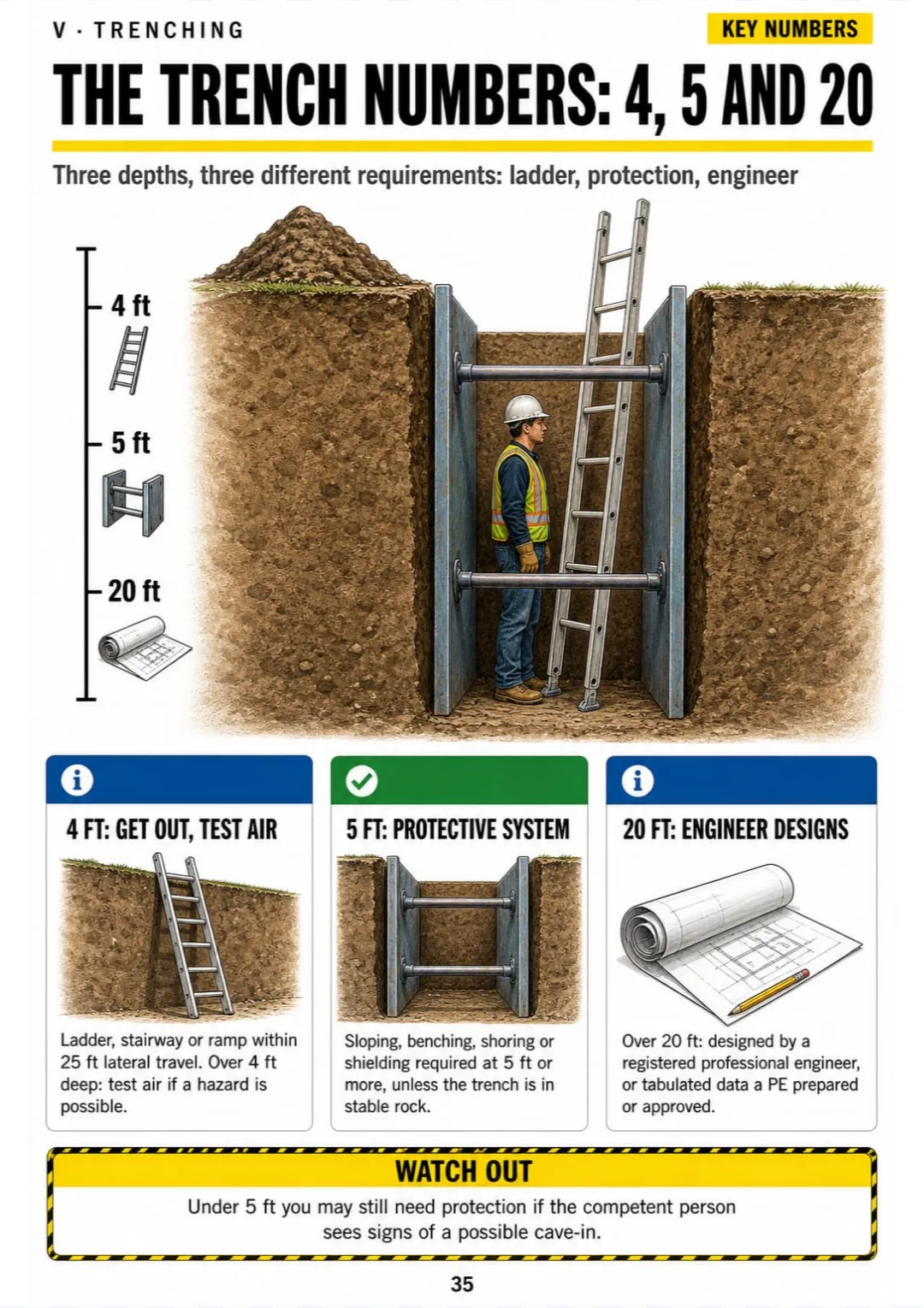
4 ft ladder within 25 ft · 5 ft protective system · over 20 ft designed by a PE
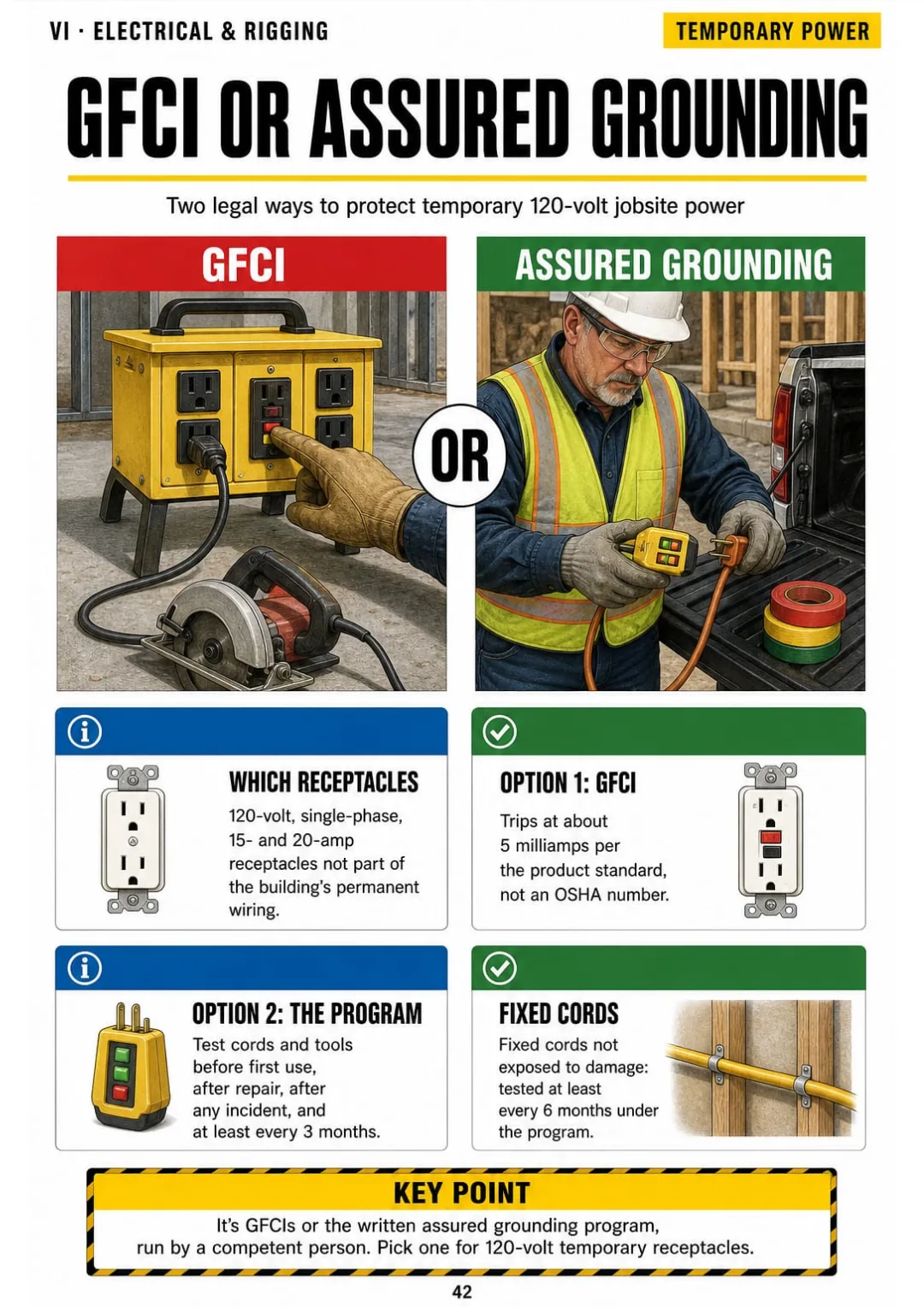
120 V, 15/20 A temporary receptacles: GFCI, or cords tested every 3 months
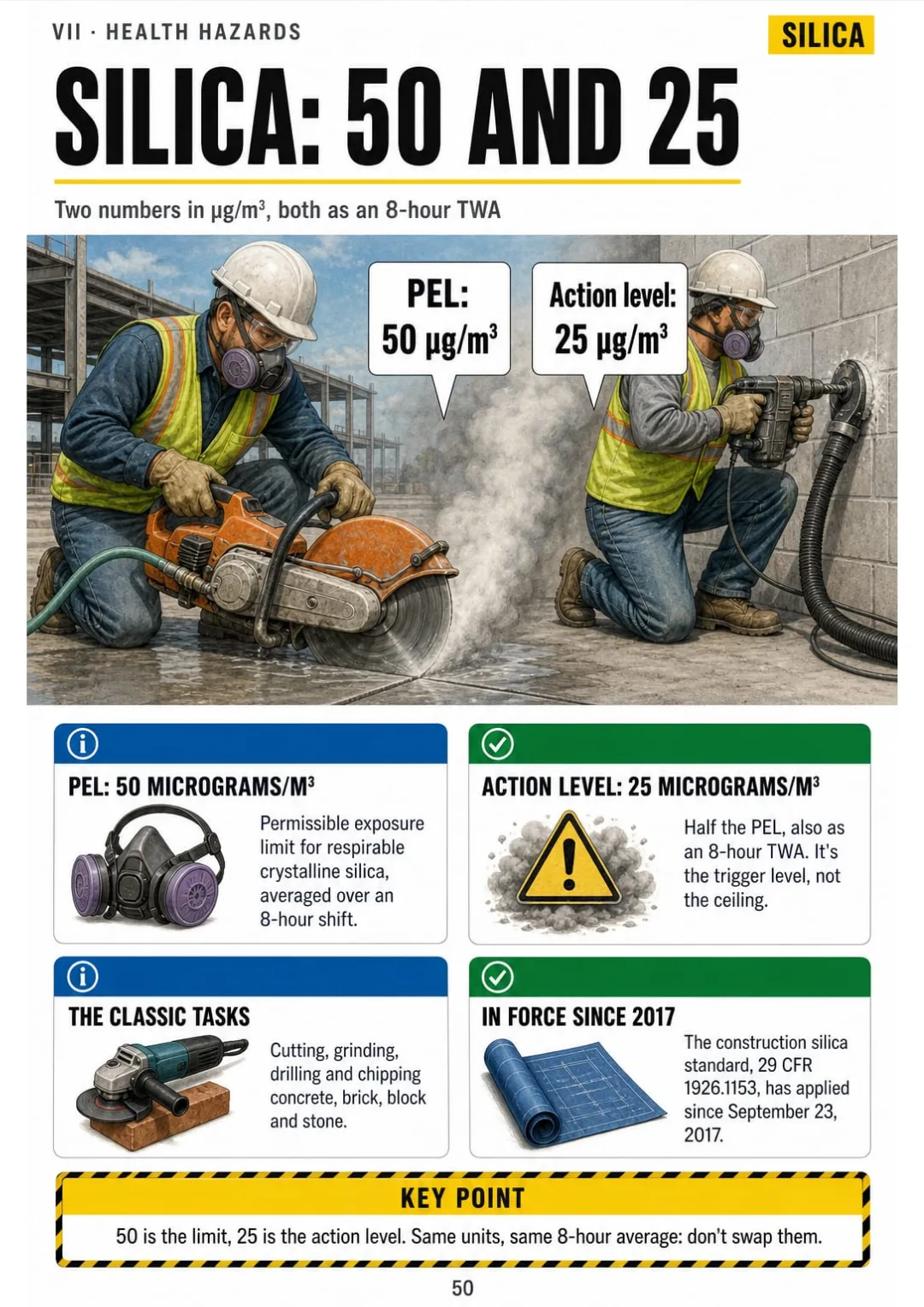
Silica: PEL 50 µg/m³ and action level 25 µg/m³, both as an 8-hour TWA
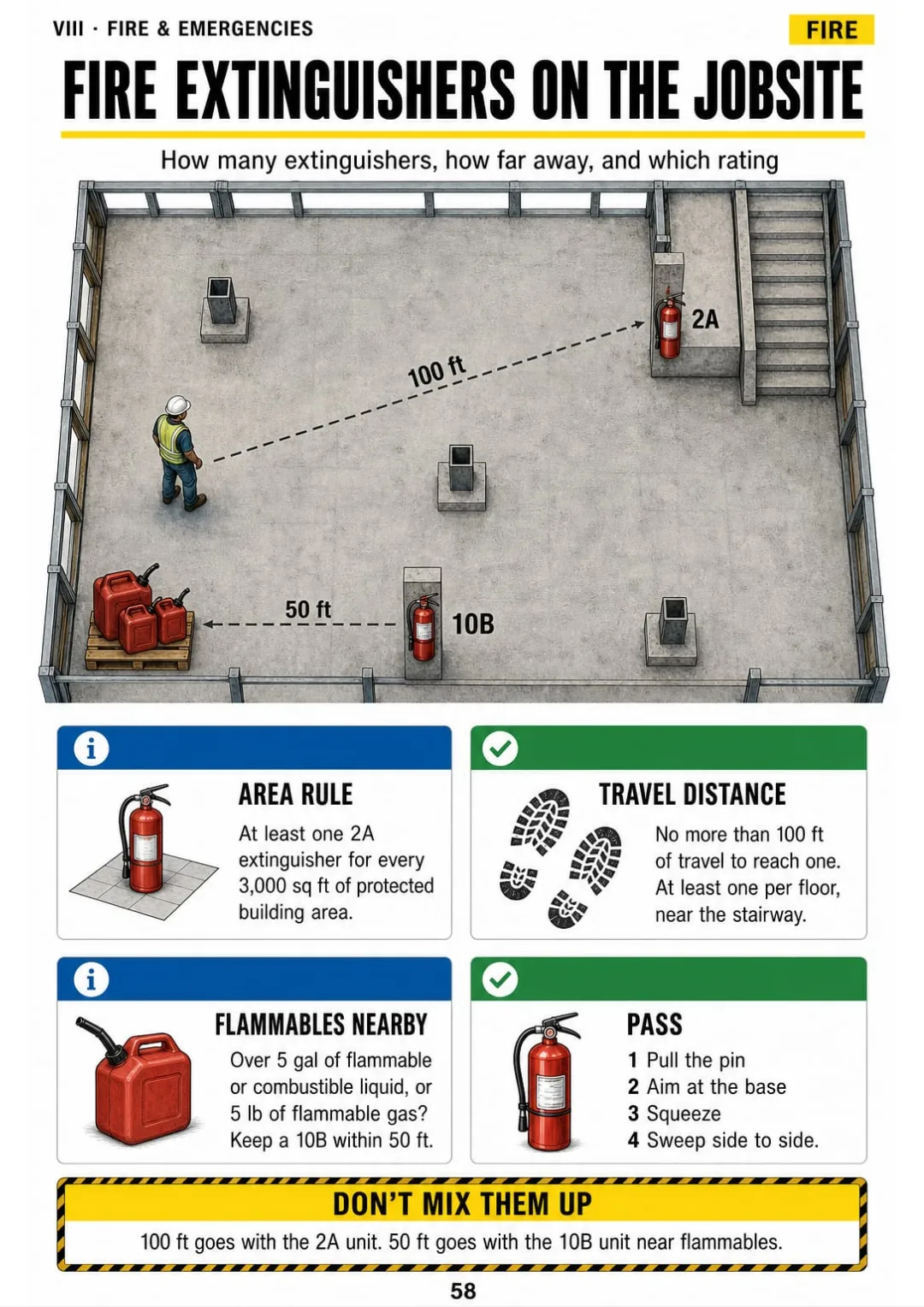
One 2A per 3,000 sq ft within 100 ft; 10B within 50 ft of flammables

Swipe to see more →

These are real pages from the book. The table of contents is the full one: 9 parts and 62 topics.

You've Seen These Numbers on Site. The Standard Just Scatters Them.

You're on a second-floor deck while a crew frames walls near the edge, and the super turns to you: do these guys need to be tied off or not?

You know it's somewhere around 6 feet. But is it 6 on a scaffold too? And on a fixed ladder? The manual gives you those numbers in paragraphs, one subpart after another, and by the next morning they've all run together.

Prompt rescue or self-rescue required · hanging still can cause suspension trauma

In the book, the 6-foot rule is one page: one jobsite drawn with its four heights marked: 6 feet on an edge, 10 on a scaffold, 15 in steel erection, 24 on a fixed ladder.

Trench depths, guardrail heights, power line distances, silica limits and the incidence rate formula work the same way: each one has its own page.

You see the drawing, you know which number goes with which kind of work, and you give the super an answer without going back to the manual.

COMPARE FOR YOURSELF

The Same Topic, Two Ways to Study It

THIS
  • The manual: line after line after line
  • Safety program elements explained only in words
  • Seven elements in one long sentence, nothing to picture
The recommended practices for safety and health programs in construction identify a set of core elements which, when implemented in an integrated fashion, are intended to establish a systematic approach to the identification and control of workplace hazards. These elements comprise management leadership; worker participation; hazard identification and assessment; hazard prevention and control; education and training; program evaluation and improvement; and communication and coordination among host employers, contractors and staffing agencies, each of which is further subdivided into action items whose interrelationship must be understood by the employer.
FOR THIS
  • The safety program drawn as one wall
  • The 7 elements in one box
  • Seven elements, one wall: you see which one is missing
OSHA's 7 recommended program elements, drawn as one wall
CONTENTS

Take a Look at the 9 Parts and 62 Topics

How the exam works, programs and safety math, fall protection, ladders and scaffolds, trenching, electrical and cranes, health hazards, fire and emergencies, and the final review: 66 pages, all illustrated

IHow the Exam and the Standard Work · pp. 5-9
  1. What the Technician Exam Covers
  2. How to Read 29 CFR 1926 Without Getting Lost
  3. The 4-Step Page: Hazard, Control, Key Number, Worked Example
  4. The Hierarchy of Controls as a Ladder
  5. Competent Person vs. Qualified Person
IIPrograms, Records and Safety Math · pp. 10-18
  1. The Written Safety Program in One Drawing
  2. What Gets Recorded on the 300 Log
  3. The 300, 300A and 301 Forms and Their Dates
  4. Reporting to OSHA: 8 Hours and 24 Hours
  5. Total Hours Worked: Where the Math Starts
  6. The Incidence Rate, Step by Step
  7. DART Rate: Same Formula, Different Cases
  8. Severity Rate and Lost Days
  9. Leading vs. Lagging Indicators and the EMR
IIIFall Protection · pp. 19-27
  1. The 6-Foot Rule in Construction
  2. Guardrails: The Three Numbers
  3. Holes and Covers
  4. The ABCs of a Personal Fall Arrest System
  5. The Arrest Numbers: 6, 3.5 and 1,800
  6. Fall Clearance: Do the Math Before You Tie Off
  7. Swing Fall: The Pendulum Hazard
  8. Low-Slope Roofs: Warning Lines and Monitors
  9. Fall Rescue and Suspension Trauma
IVLadders, Scaffolds and Aerial Lifts · pp. 28-34
  1. When a Ladder or Stairway Is Required
  2. Extension Ladders: 4-to-1 and 3 Feet Above
  3. Stepladders: Top Cap and Top Step
  4. Scaffold Capacity: The 4-Times Rule
  5. Scaffold Platforms and Planks
  6. Scaffold Inspection and the 4-to-1 Tip Rule
  7. Aerial Lifts and Scissor Lifts
VTrenching and Excavation · pp. 35-41
  1. The Trench Numbers: 4, 5 and 20
  2. Soil Types A, B and C
  3. Testing the Soil: Visual and Manual
  4. Sloping: The Angles in Cross Section
  5. Benching vs. Shoring vs. Shielding
  6. Spoil Piles, Equipment and Water
  7. Daily Trench Inspection
VIElectrical, Cranes and Rigging · pp. 42-49
  1. GFCI or Assured Grounding
  2. Cords, Tools and Damaged Insulation
  3. Overhead Power Lines: 10 Feet and 20 Feet
  4. Lockout/Tagout in Construction
  5. Crane Setup: Ground, Swing Radius and the Operator
  6. Signal Person and Hand Signals
  7. Sling Angles: Why 30 Degrees Doubles the Load
  8. Rigging Inspection: When a Sling Comes Out of Service
VIIHealth Hazards: Silica, Noise, Heat and Chemicals · pp. 50-57
  1. Silica: 50 and 25
  2. Silica Controls: Water, Vacuum and the Written Plan
  3. Noise: 90 dBA and the 5-Decibel Exchange
  4. Hearing Protection Math: NRR Derating
  5. Heat Illness: Water, Rest, Shade
  6. Respirators: APF, Fit Test, Medical
  7. Hazard Communication: Labels and the SDS
  8. Confined Spaces in Construction
VIIIFire, Emergencies and Equipment · pp. 58-61
  1. Fire Extinguishers on the Jobsite
  2. Hot Work and the Fire Watch
  3. The Emergency Action Plan
  4. Heavy Equipment and Struck-By Hazards
IXReview and Exam Day · pp. 62-66
  1. All the Key Numbers on One Page
  2. Look-Alike Numbers You Must Not Mix Up
  3. The Safety Math in 3 Formulas
  4. How to Read a Multiple-Choice Question
  5. The Night Before and Exam Day Checklist

One Page, One Topic, All Clear

Think of it this way:

You're standing at the edge of a trench and the foreman says it's about five and a half feet deep. You need to know right now whether it needs a protective system.

You open the page on the trench numbers and see the trench in cross section: a ladder at 4 feet, a protective system at 5 feet, a design by a professional engineer past 20 feet.

4 ft ladder within 25 ft · 5 ft protective system · over 20 ft designed by a PE

Same with guardrails, fall clearance, sling angles, the silica limits and the incidence rate: each one on its own page.

Construction Safety Exam Illustrated is 9 parts and 62 topics, all drawn, and it ends with a review: every key number on one page and the safety math in 3 formulas.

What you see drawn, you don't have to memorize.

What's Inside Construction Safety Exam Illustrated:

Ipp. 5-9

How the Exam and the Standard Work

Know the map before you study: what the technician exam covers, how to read 29 CFR 1926 without getting lost, the 4 steps every page follows, the hierarchy of controls as a ladder, competent vs. qualified person

IIpp. 10-18

Programs, Records and Safety Math

The written safety program, the 300 log and its forms, 8- and 24-hour reporting, total hours worked, incidence, DART and severity rates, leading vs. lagging indicators and the EMR

IIIpp. 19-27

Fall Protection

The 6-foot rule, guardrails, holes and covers, the ABCs of fall arrest and its numbers, fall clearance, swing falls, low-slope roofs and fall rescue

IVpp. 28-34

Ladders, Scaffolds and Aerial Lifts

When a ladder or stairway is required, extension ladders and stepladders, scaffold capacity, platforms and inspection, aerial and scissor lifts

Vpp. 35-41

Trenching and Excavation

The trench numbers 4, 5 and 20, soil types A, B and C, soil testing, sloping angles, benching vs. shoring vs. shielding, spoil piles and daily inspection

VIpp. 42-49

Electrical, Cranes and Rigging

GFCI or assured grounding, cords and tools, overhead power lines, lockout/tagout, crane setup, the signal person, sling angles and rigging inspection

VIIpp. 50-57

Health Hazards: Silica, Noise, Heat and Chemicals

Silica limits and controls, noise and NRR derating, heat illness, respirators, hazard communication and confined spaces

VIIIpp. 58-61

Fire, Emergencies and Equipment

Jobsite fire extinguishers, hot work and the fire watch, the emergency action plan, heavy equipment and struck-by hazards

IXpp. 62-66

Review and Exam Day

All the key numbers on one page, look-alike numbers, the safety math in 3 formulas, how to read a multiple-choice question and the exam day checklist

At the end of the book: A final review with every key number on one page, look-alike numbers side by side and the safety math in 3 formulas.
Plus: 2 Free Books

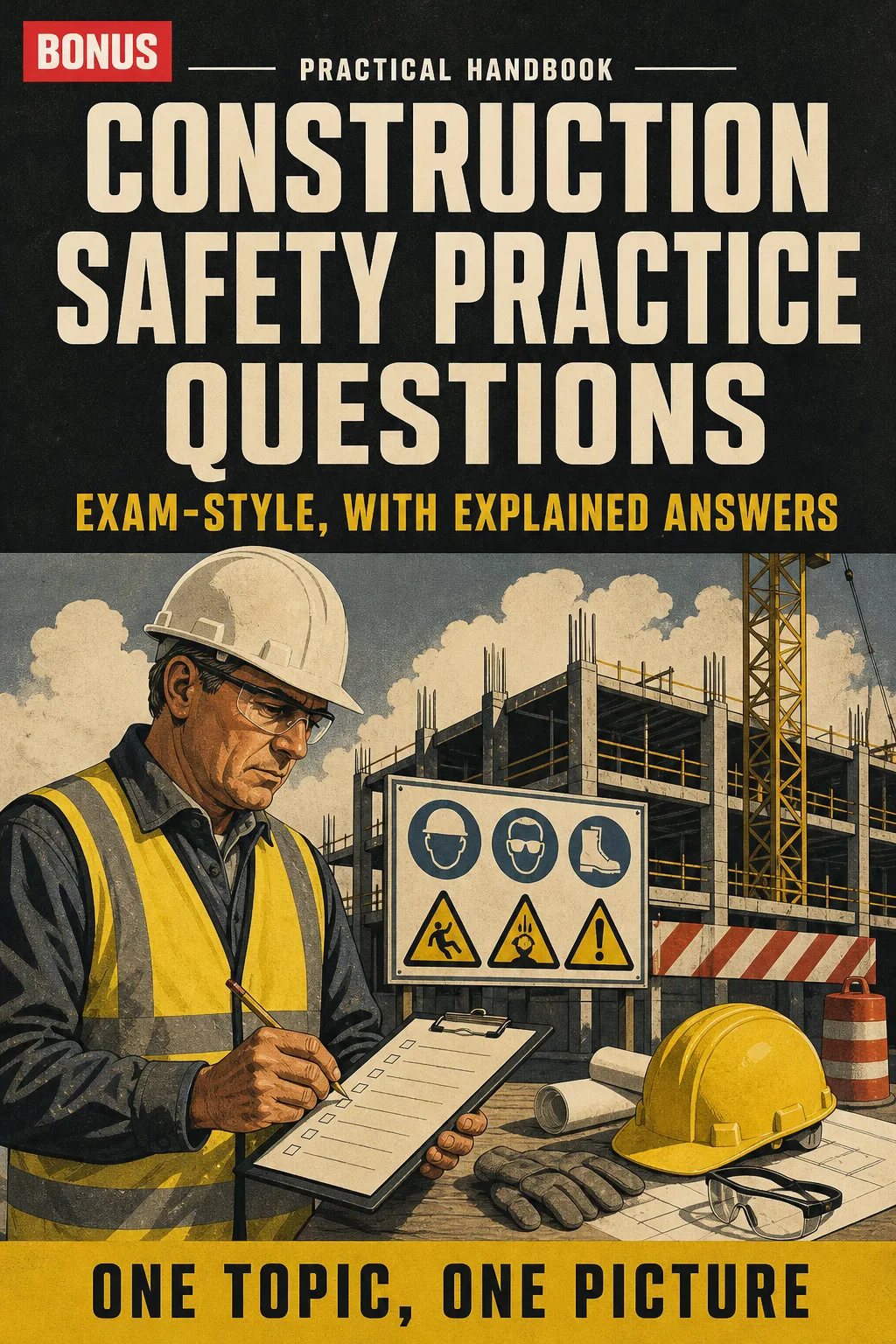
Construction Safety Practice Questions: Exam-Style, With Explained Answers

BONUS 1: «Construction Safety Practice Questions: Exam-Style, With Explained Answers»

Value on its own: US$ 17.90

Test yourself in the exam's multiple-choice style and see why each right answer is right, so you know which pages to go back to.

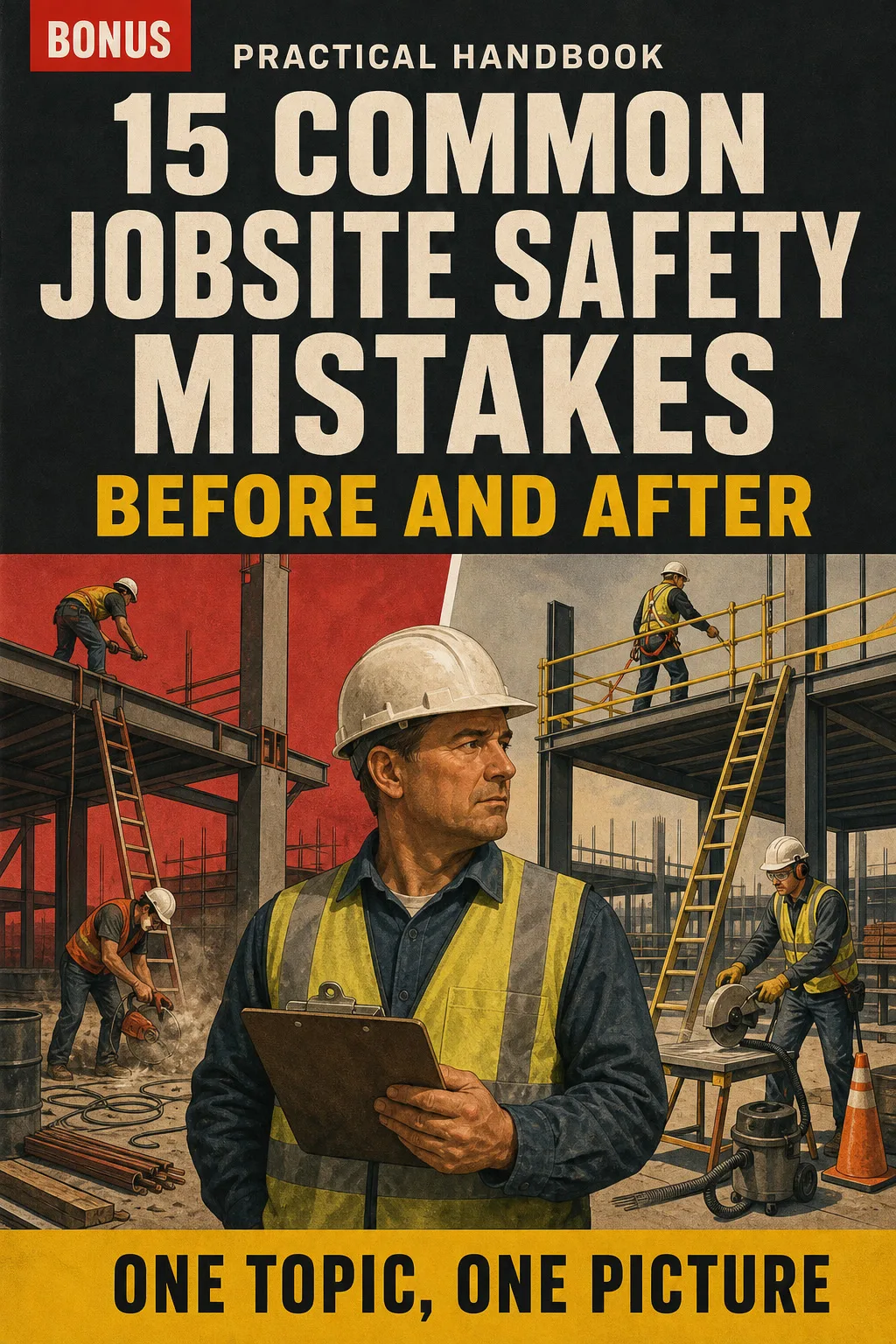
15 Common Jobsite Safety Mistakes: Before and After

BONUS 2: «15 Common Jobsite Safety Mistakes: Before and After»

Value on its own: US$ 14.90

The most frequent mistakes on a jobsite walkthrough and on the exam, each one drawn wrong and then right, for a quick review the night before.

Construction Safety Exam Illustrated with 2 Free Books

  • Construction Safety Exam Illustrated: 66 illustrated pagesUS$ 87
  • BONUS 1: Construction Safety Practice Questions: Exam-Style, With Explained AnswersUS$ 17.90
  • BONUS 2: 15 Common Jobsite Safety Mistakes: Before and AfterUS$ 14.90
  • High-resolution PDF to printIncluded
Total value US$ 119.80
YOUR PRICE:
US$ 37
You save US$ 82.80
YES, I WANT CONSTRUCTION SAFETY EXAM ILLUSTRATED FOR US$ 37

📄 This is a digital PDF book sent to your email: nothing is printed or shipped.

Secure purchaseEncrypted payment30-day guarantee

PDF by email: We email you Construction Safety Exam Illustrated as a PDF, together with the two free books. It's a single payment: no installments, no extra charges.

Who This Book Is For

You're studying for the technician exam

You're studying for the technician exam

Every topic on the blueprint has its own drawn page, in the same 4 steps: hazard, control, key number, worked example. You study at night and it lines up with what you already see on site.

Your exam date is close

Your exam date is close

The review part puts every key number on one page, the look-alike numbers side by side and the safety math in 3 formulas. The night before, you go over those pages instead of the whole manual.
You already work in safety

You already work in safety

Print the pages you need and keep them in the truck. When the super asks about a trench or a tie-off, the number is one page away.

Everything You Get Today

US$ 119.80US$ 37
YES, I WANT CONSTRUCTION SAFETY EXAM ILLUSTRATED FOR US$ 37

📄 This is a digital PDF book sent to your email: nothing is printed or shipped.

30DAYS
GUARANTEE

30-Day Guarantee

Try Construction Safety Exam Illustrated for 30 days, bonus books included.

We refund everything if the file won't open, if the book isn't what you see here, if you were charged twice or if the email doesn't arrive. Just email us.

You pay once. No subscriptions.

Frequently Asked Questions

Is this for me if I've been in the trades for years and haven't taken an exam in a long time?

Yes. It's built for people who already know the jobsite. Every page starts from a drawing of the site, and the incidence rate math is worked one step at a time, with no prior math assumed.

Where does the content come from?

From OSHA's construction standards (29 CFR 1926), OSHA recordkeeping (29 CFR 1904) and the current exam blueprint for the construction health and safety technician certification, in effect since August 2024. Key numbers are flagged so you can check them against the current official version.

Is this official material?

No. It's an independent study book. It isn't affiliated with or endorsed by OSHA, BCSP or any certifying body.

I already have my OSHA 30. Isn't this the same thing with drawings?

No. The OSHA 30 is jobsite training. This book is for the technician exam: the key numbers side by side, the 300 log and the incidence, DART and severity rate math worked step by step, and multiple-choice practice. It's a study and review book: it doesn't replace an OSHA 10 or 30 course, first aid training, the judgment of a competent person or the current text of the standards.

Are the practice questions the ones on the exam?

No. They're written for this book, in multiple-choice style, to help you practice. They aren't official exam questions.

When and how do I get it?

The book and the 2 bonus books arrive as PDFs by email, at the address you enter when you pay.

Is it a one-time payment? Do I get a certificate?

One-time payment, no subscription. It's a study book: it doesn't come with a certificate, training hours or CEUs. The certification comes only from passing the exam with the certifying body.

Can I have it on paper?

Yes. It's a PDF you can print at home or at a print shop, all of it or just the pages you want to keep in the truck.

How does the refund work?

You have 30 days. We refund everything if the file won't open, if the book isn't what you see on this page, if you were charged twice or if the email doesn't arrive: just email us.

Before You Close This Page

No more rereading the standard and keeping nothing.

The 6-foot rule, the trench numbers, the power line distances: you see them drawn, and that's it.

You walk into the exam knowing where everything is.

Drawings make studying faster.

The book is right below.

One-time payment: US$ 37 · Guarantee: 30 days · PDF by email

YES, I WANT CONSTRUCTION SAFETY EXAM ILLUSTRATED FOR US$ 37

📄 This is a digital PDF book sent to your email: nothing is printed or shipped.